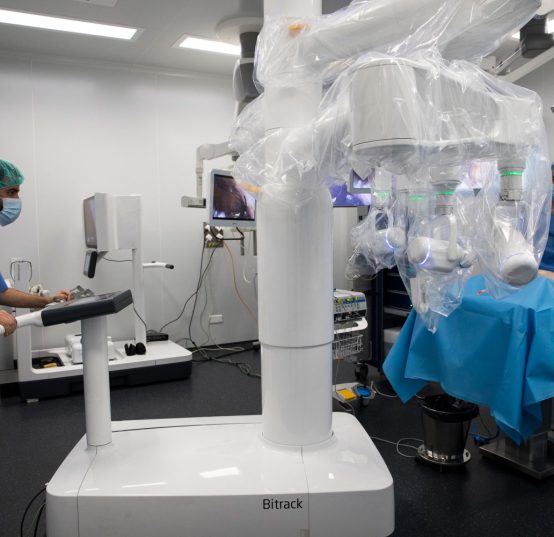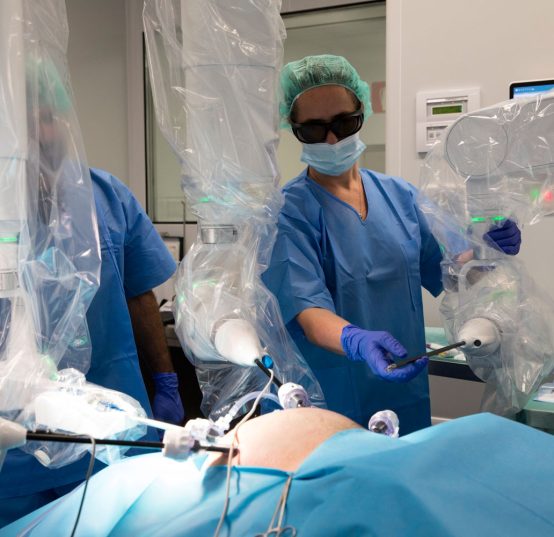

The ROB bases its value proposition on three pillars: high precision and safety that benefits the patient, usability for the surgeon and reduction of surgical costs for the hospital.
Josep Amat is a Doctor in Industrial Engineering and emeritus professor of Architecture and Computer Science at the Polytechnic University of Catalonia (UPC). He is an advisor to the CREB-UPC Robotics and Vision Group. From 1991 to 2006 he was a visiting professor at the Massachusetts Institute of Technology (MIT) and is a member of the Institute of Catalan Studies and the Royal Academy of Sciences and Arts of Barcelona. He currently focuses his research on robotic surgery and the development of ROB.
From the first concept, Dr. Amat’s desire has been to improve current robotic surgery and make it available to as many beneficiaries as possible: “Rob Surgical improves current robotics and offers a flexible and versatile open platform formed by a four-arm column that allow controlling the movements of surgical instruments with precision.
Reducing the cost per operation is one of the challenges that Rob Surgical had to face, allowing more medical centers and hospitals to offer the robotic surgery service: “ROB offers a significant reduction in the total cost per surgery that benefits hospitals, since It does not require a dedicated operating room, it requires less staff and supports hybrid surgeries”.
The cost reduction has been possible thanks to many factors, such as its design and ease of transport, which allows the same to operate in different hospitals, compatibility with the instruments that the hospital already has and hybrid surgery, which reduces the time and cost of each intervention. “The differentiating factor of Rob Surgical lies in the possibility of performing hybrid surgeries, alternating manual maneuvers and high-precision maneuvers assisted by the robot” explains Dr. Amat.
In short, Dr. Josep Amat defines the Rob as engineering at the service of surgeons: “Its ergonomics and usability allow the surgeon to make the most of their medical skills, with the extreme precision of a robotic system. “Hybrid surgery allows us to put the patient and the surgeon’s needs back at the center of the surgical procedure”.